Scientists identify three physiological signs that give away lying
German researchers found that attempts to hide the truth are accompanied by involuntary changes in human eyes due to increased brain load.
 👥Society
Photo: TSN
Key points
- German scientists identified three eye-movement signs of lying
- Pupil dilation and reduced blinking are linked to brain strain
- People take twice as long to process a lie compared to the truth
The question of detecting falsehood has intrigued humanity for centuries, yet modern science continues to search for precise markers of deception. A recent study by specialists at Ulm University in Germany has shed light on how our bodies react when we attempt to conceal information. Researchers focused on eye reactions, which are difficult to control consciously due to high cognitive load.
Eye behavior characteristics during deception
During an experiment involving volunteers and a professional mentalist, researchers tracked eye movements using specialized equipment. It turned out that when lying, the human body demonstrates three distinct physiological reactions. Specifically, participants' pupils dilated noticeably due to the intensive work of the brain trying to generate and maintain false information.
Additionally, the experiment recorded changes in blinking frequency and gaze duration. Those attempting to deceive their interlocutor blinked much less frequently while trying to control their behavior, and their gaze became more prolonged although less mobile. Reaction time also differed significantly: while truthful answers were given in just over a second, deception took about two seconds to process.
Despite these fascinating findings, scientists emphasize that the study was conducted in controlled laboratory conditions. This means it is too early to speak of a foolproof eye-movement lie detector, although in the future these data could be applied in criminal investigations or security systems.
Source TSN — tsn.ua/tsikavinki/iak-zrozumity-shcho-vam-breshut-vcheni-nazvaly-try-oz… ↗
Read next
 🇺🇦Ukraine
Foreign Policy: Europe Steps Up Support for Ukraine Amid US Policy Shift
Foreign Policy reports that following a shift in the Trump administration's stance, European nations are left to independently secure financial and defensive backing for …
 🇺🇦Ukraine
Estonia warns Ukraine against attacking tankers in the Baltic Sea due to environmental risks
Estonian Prime Minister Kristen Michal stated that the country will not allow its territory to be used for attacks on vessels, citing the risk of environmental pollution.
 🚨Events
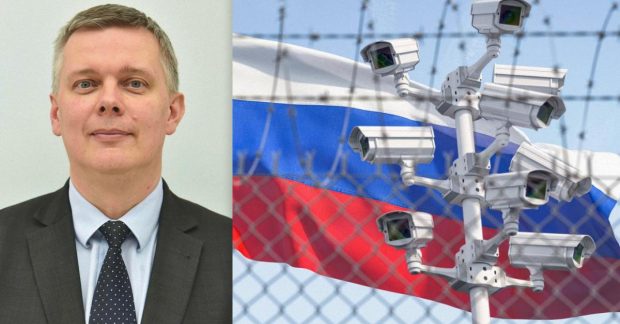
Polish intelligence warns: Russian sabotage in Europe will continue even after the war ends
Polish intelligence coordinator Tomasz Siemoniak stated that Russia's hybrid aggression against European nations will not cease even after a peace agreement is reached in…
 🎭Culture & Sport
Documentary about Ukrainian National Guard wins Emmy Award
The film '24 Hours in the Kill Zone' received a prestigious international award in the 'News' category. The documentary depicts the heroism of the 'Rubizh' brigade soldie…
 🏛️Politics
SBI finds no evidence in case against SAPO head Oleksandr Klymenko
The State Bureau of Investigation reported that there are no procedural documents confirming covert investigative actions against the head of the SAPO and his family.
 🏙️City
Incident in South Korean Air Defense Zone: Russian Aircraft Approach Borders
Russian aircraft entered South Korea's air defense identification zone, triggering a brief alert due to the mistaken identification of the planes as North Korean.